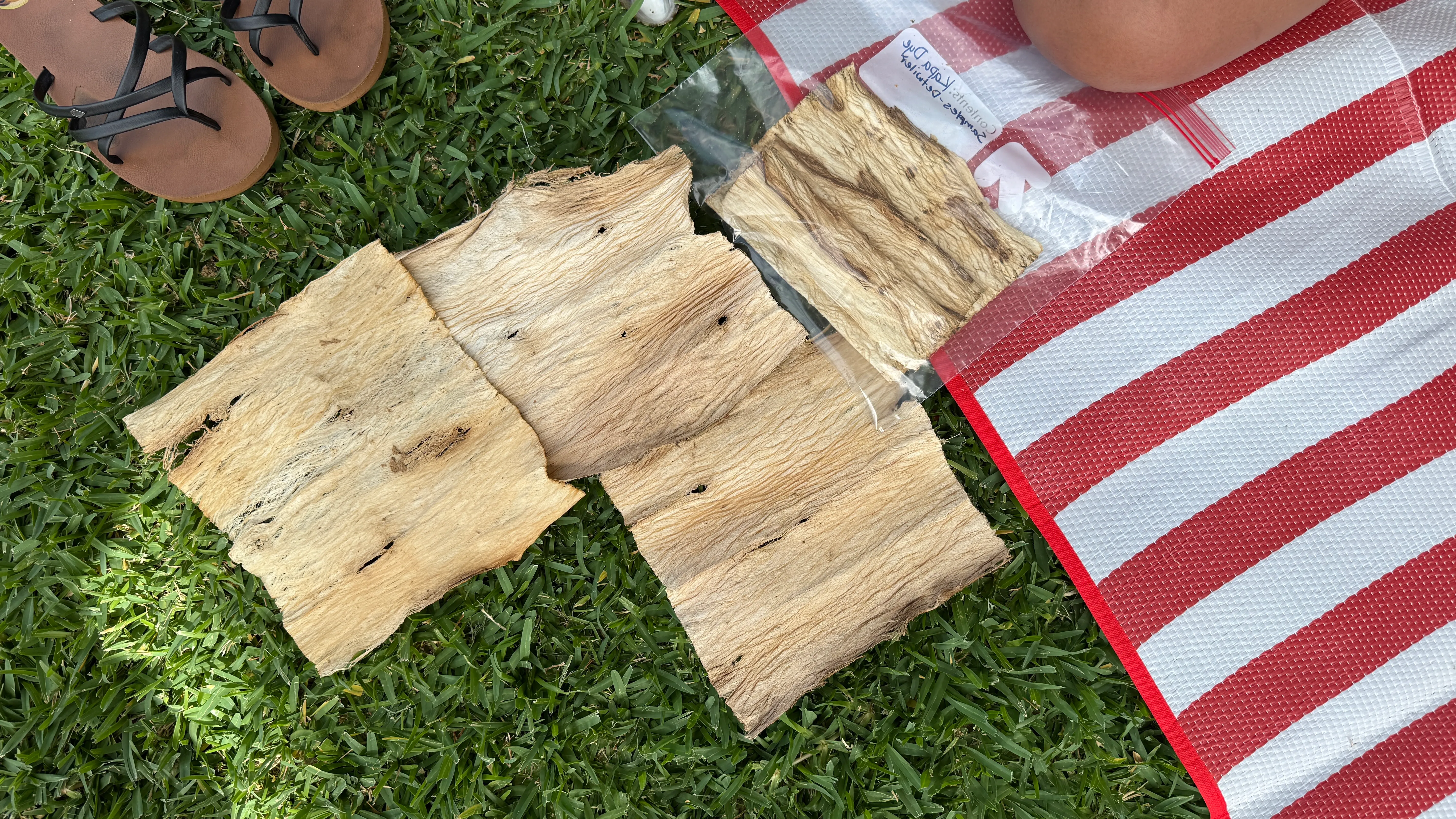
There is a word in Hawaiian that does not translate cleanly into English: kilo. It means to observe, but not casually. It means to watch with patience, with intention, with the kind of sustained attention that most modern frameworks would call research but that feels, in practice, much older and much more alive than that.
Trezaloha Creative was built on that kind of looking.
These are not borrowed aesthetics or surface-level references. They are the actual architecture of how work gets made here.
It starts with a question most studios don't ask
Most design and art practices begin with a brief, a client, a concept, a deadline. Those things matter. But before any of them, there is a more foundational question: whose worldview is shaping this work?
That question is not rhetorical. The tools we reach for, the structures we organize our thinking around, the way we define what a "solution" looks like, all of it carries a worldview embedded inside it. Western design thinking, as a formalized methodology, is no exception. It is a product of particular institutions, particular histories, particular assumptions about what creativity is for and who it serves.
ʻŌiwi perspectives, indigenous Hawaiian ways of knowing and making, offer something different. Not as a rejection of rigor, but as an expansion of it. A different set of questions. A different relationship to time, to place, to the materials and communities a practice touches.
This studio is built on those perspectives. It always has been.
Three practices that shape everything
There are three frameworks from Hawaiian knowledge traditions that run through every project at Trezaloha Creative, whether the work is a kapa piece, a brand identity, a spatial installation, or a UX system.
Kilo, sustained observation. Before anything is made, something must be seen. Kilo is the practice of watching carefully over time, reading an environment, a community, a set of conditions, and letting what is actually there inform what comes next. It is rigorous and unhurried. It resists the impulse to jump immediately to solutions.
Moʻolelo, story as structure. Hawaiian narrative tradition is not just content. Moʻolelo is a way of organizing meaning, of understanding how things connect, how the past informs the present, how a single thread of story can hold a community together across generations. In creative practice, moʻolelo asks: what is the larger story this work belongs to? What does it carry forward, and for whom?
Hana noʻeau, the intelligence of skilled work. Hana noʻeau roughly translates to skilled, thoughtful work, but the concept runs deeper than technical proficiency. It is the idea that making something well is itself a form of knowledge. That the hands and the mind are not separate. That craft, art, and design are not different categories of activity but different expressions of the same disciplined attention.
These are not borrowed aesthetics or surface-level references. They are the actual architecture of how work gets made here.
What this looks like in practice
It means that a graphic design project begins with the same quality of attention as a kapa-making session. It means that an exhibition or installation is understood not just as visual output but as a moʻolelo being told through space. It means that every workshop, every collaboration, every client engagement is approached with the understanding that making something is always also a relational act, between maker, material, community, and place.
It means that the studio holds two spheres, design and art, not as separate departments but as two expressions of a single creative intelligence rooted in ʻōiwi ways of knowing.
That is the practice. That is the perspective.
A note on accuracy and care
Working from an ʻōiwi perspective also means being careful. It means not performing indigeneity for aesthetic effect. It means not borrowing language, symbols, or frameworks without the depth of knowledge and relationship that gives them meaning.
The concepts named in this post, kilo, moʻolelo, hana noʻeau, are part of a living knowledge tradition. They are engaged with here because they are genuinely central to how this studio works, not because they make the work sound interesting.
That distinction matters. It is part of what it means to create responsibly from this perspective.