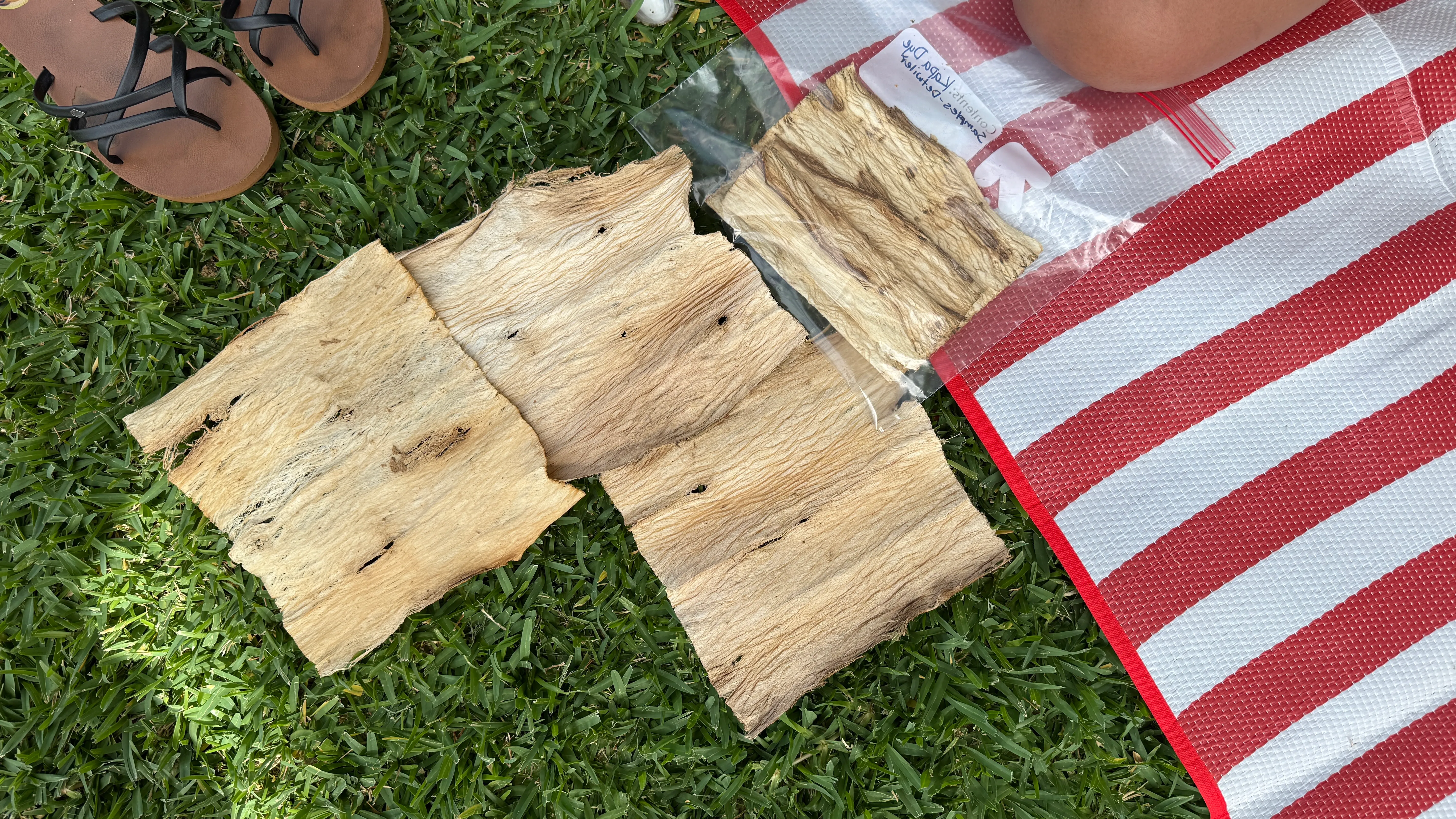
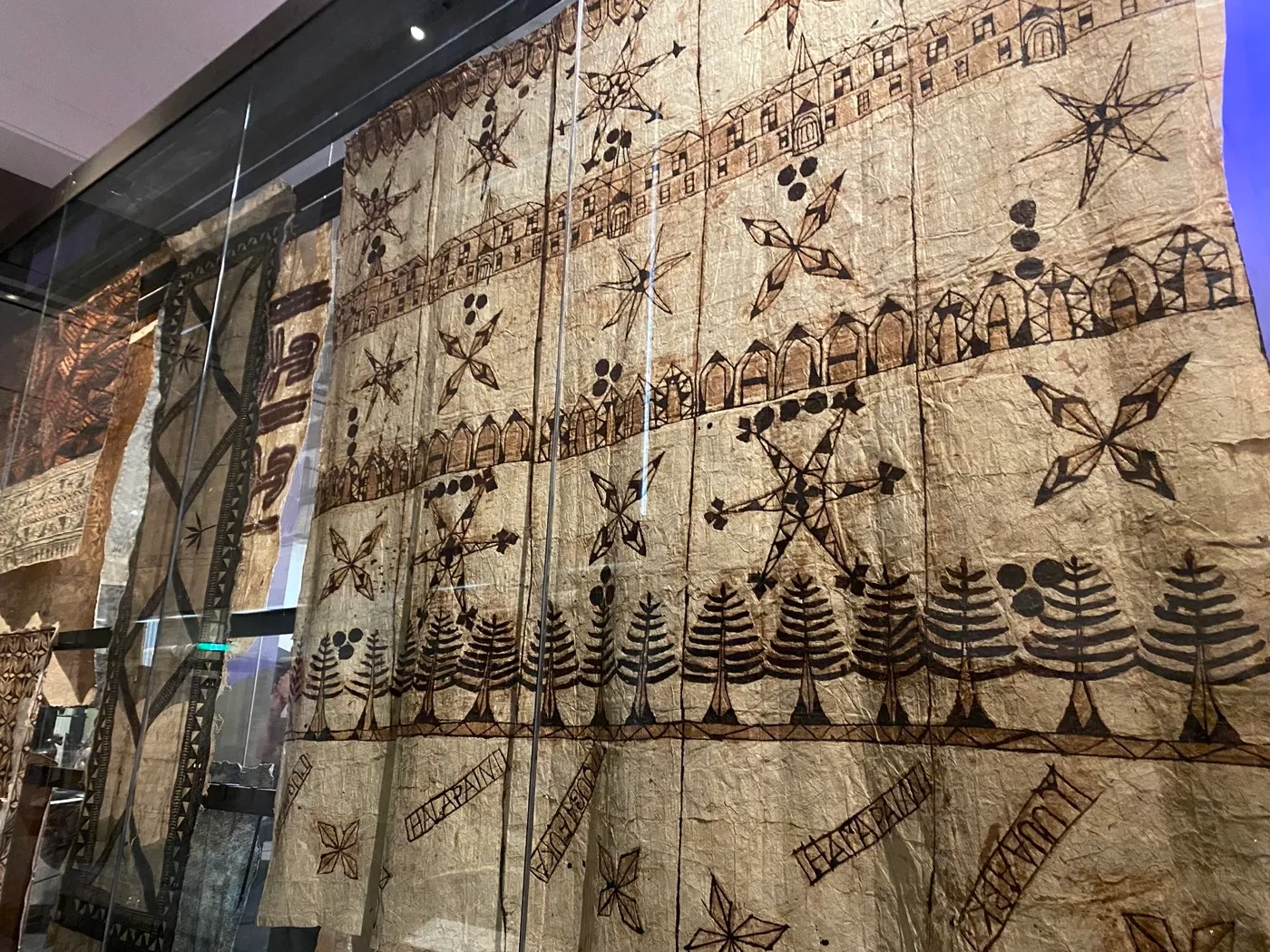
Barkcloth is one of the most widely distributed material traditions in the Pacific. Across Polynesia and into parts of Melanesia and Southeast Asia, cultures independently developed the practice of harvesting the inner bark of specific plants, processing it through soaking and beating, and producing cloth used for clothing, ceremony, exchange, and everyday life.
In Hawaiʻi, this cloth is called kapa. Elsewhere in Oceania, it carries different names: tapa in Tonga and Samoa (from which the broader English term derives), ngatu in Tonga, siapo in Samoa, masi in Fiji. Each tradition has its own materials, its own processes, its own visual languages, and its own cultural meanings. What connects them is a shared recognition, expressed through centuries of material practice, that barkcloth is not just fabric. It is knowledge made tangible.
What connects these traditions is a shared recognition that barkcloth is not just fabric. It is knowledge made tangible.
Shared materials, different expressions
The most common source plant across Pacific barkcloth traditions is Broussonetia papyrifera, paper mulberry, known in Hawaiʻi as wauke. It was likely brought to the Pacific through human migration, carried by Polynesian voyagers as a cultivated plant essential to material culture. Its wide distribution across the Pacific is itself evidence of the deliberate, sophisticated horticultural knowledge of Pacific peoples.
In Hawaiʻi, wauke was the primary material for kapa, though māmaki (Pipturus albidus) and other native plants were also used. In Tonga and Samoa, paper mulberry remains central to ngatu and siapo production today. In Fiji, the mulberry bark is sometimes combined with other materials for masi. The plant is the same; the knowledge built around it varies significantly by place.
Pattern as language
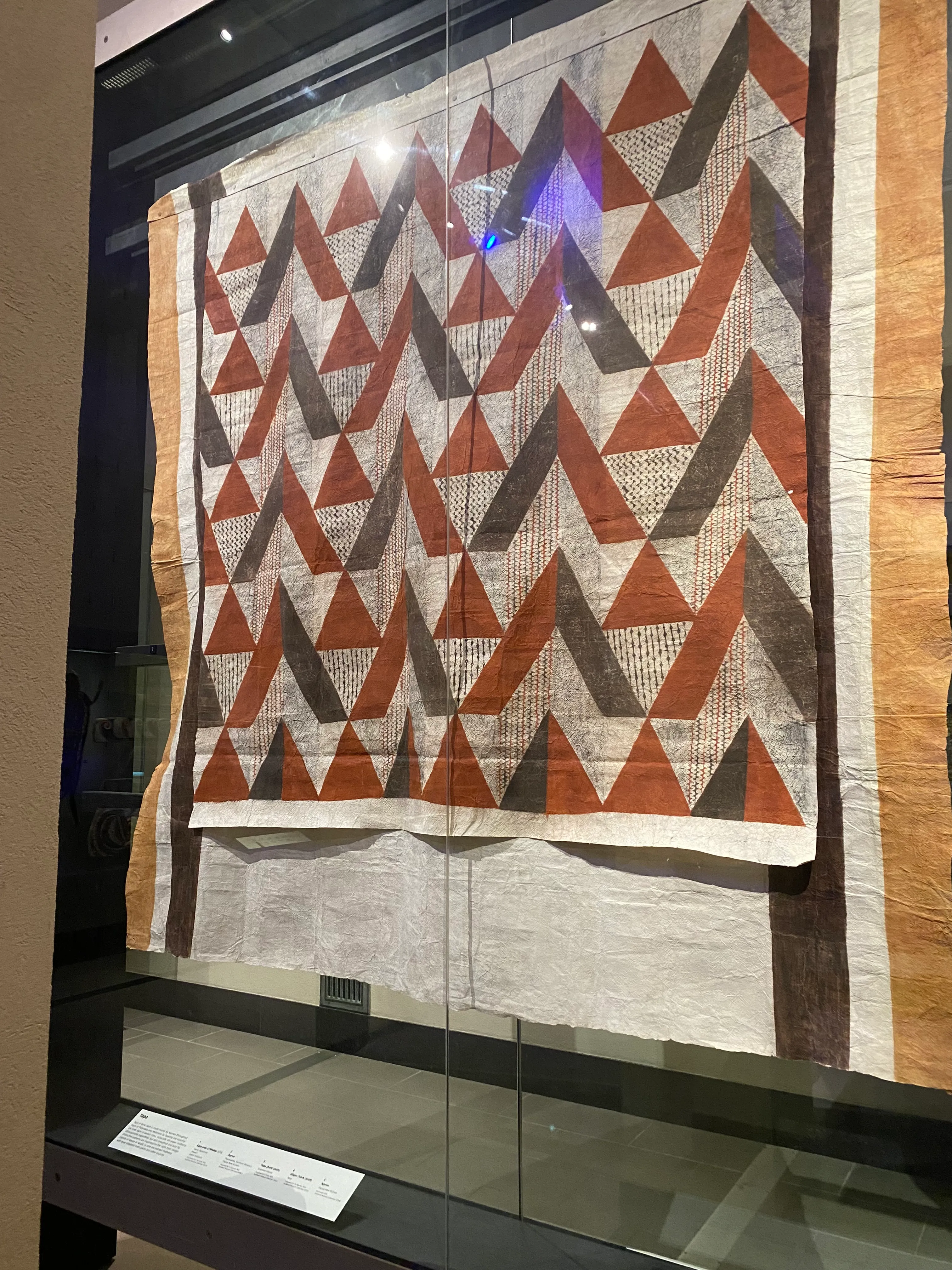
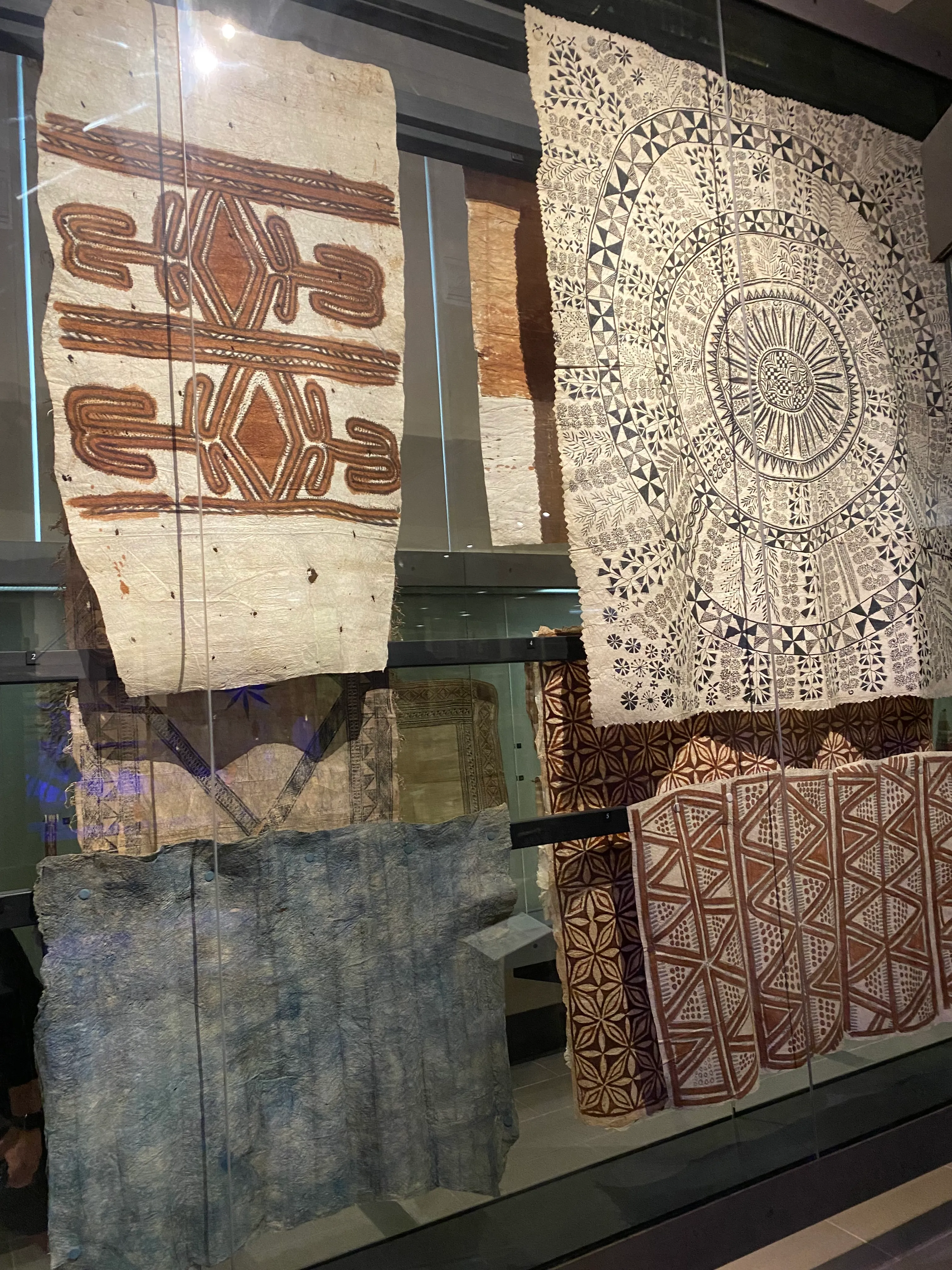
One of the most visually striking aspects of Pacific barkcloth across traditions is the sophistication and diversity of its surface decoration. In Hawaiian kapa, pattern was applied using carved bamboo stamps called ohe kapala, creating repeating geometric designs in natural dyes. The patterns were not merely decorative. Different designs carried specific meanings and were associated with particular uses, statuses, or occasions.
Samoan siapo is decorated using two primary techniques: rubbing designs through a wooden tablet called an upeti, and freehand painting. Siapo patterns are geometric and highly systematized, with specific design vocabularies that encode cultural information. Tongan ngatu is decorated with traditional designs applied using kupesi (rubbing boards) and painted with natural pigments including bark extracts.
Across these traditions, pattern functions as a form of literacy, a visual language that communicates identity, status, relationship, and occasion to those who know how to read it.
Exchange and relationship
Barkcloth has historically functioned as a medium of exchange across the Pacific, not just economically but relationally. In Tonga and Fiji, the exchange of large pieces of ngatu and masi at ceremonies, weddings, and funerals remains a living practice. The cloth itself is not simply a gift; it is a statement of relationship, of obligation, of connection across families and communities.
Hawaiian kapa functioned similarly in traditional society, as tribute, as ceremonial offering, as the material wrapping of the dead, as the cloth that marked significant life transitions. Its production was embedded in the social fabric of Hawaiian life in ways that meant its decline during the period of Western contact was not just a material loss but a cultural and relational one.
Connection across the Pacific today
For contemporary Pacific artists and practitioners working with barkcloth, the broader Pacific context is not just historical background. It is a living network of relationship and exchange. Hawaiian kapa makers have connections to Samoan, Tongan, and Fijian practitioners. Ideas move across these relationships. Knowledge is shared. The material itself becomes a medium of pan-Pacific connection.
Understanding kapa within this broader Pacific context changes what the practice means and what it can do. It situates Hawaiian material knowledge within a larger tradition of indigenous Pacific ingenuity, adaptability, and relational intelligence. It reminds us that the exchange of knowledge, like the exchange of barkcloth, has always been central to how Pacific peoples have sustained their cultures across vast distances of ocean.