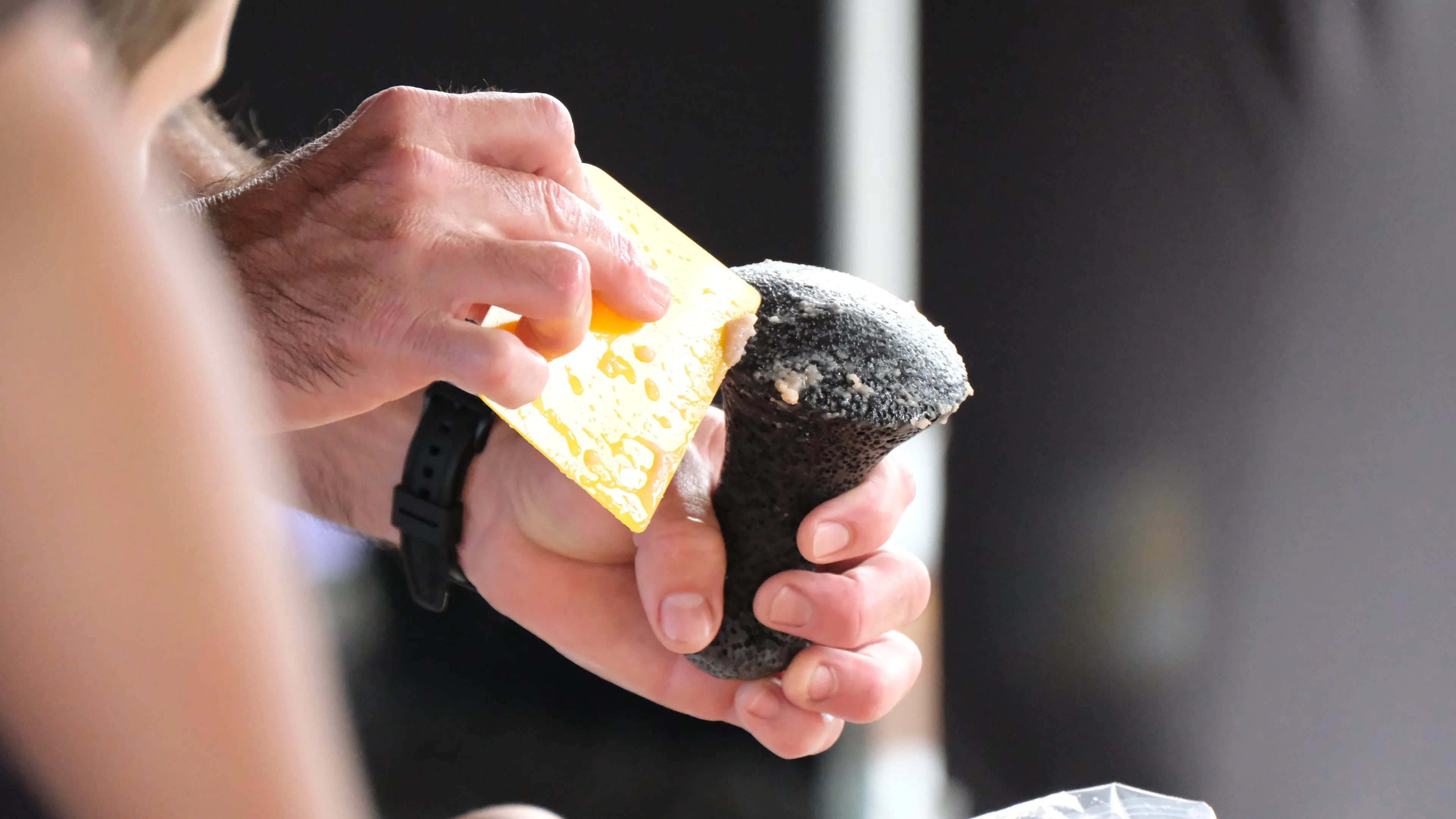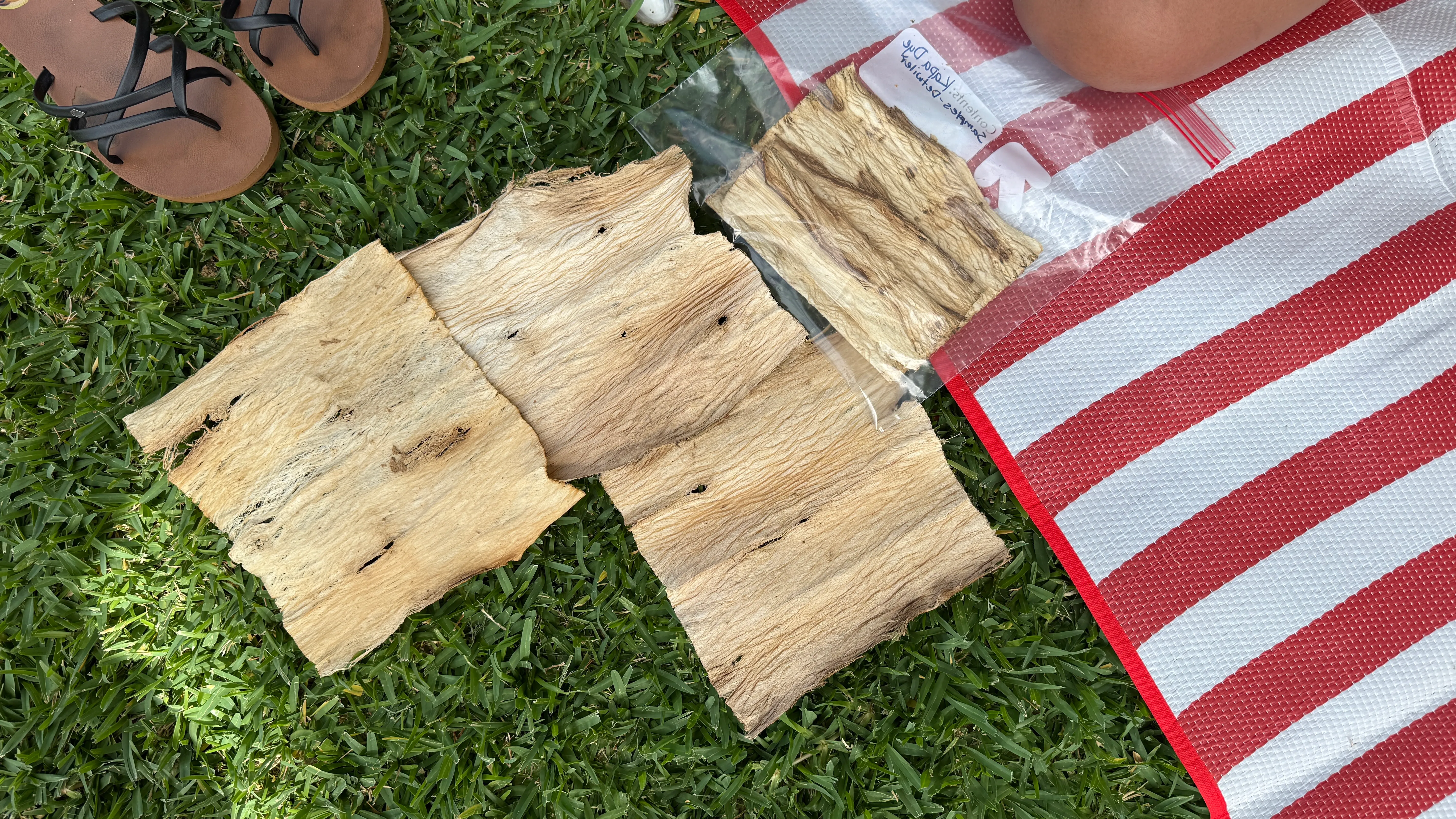
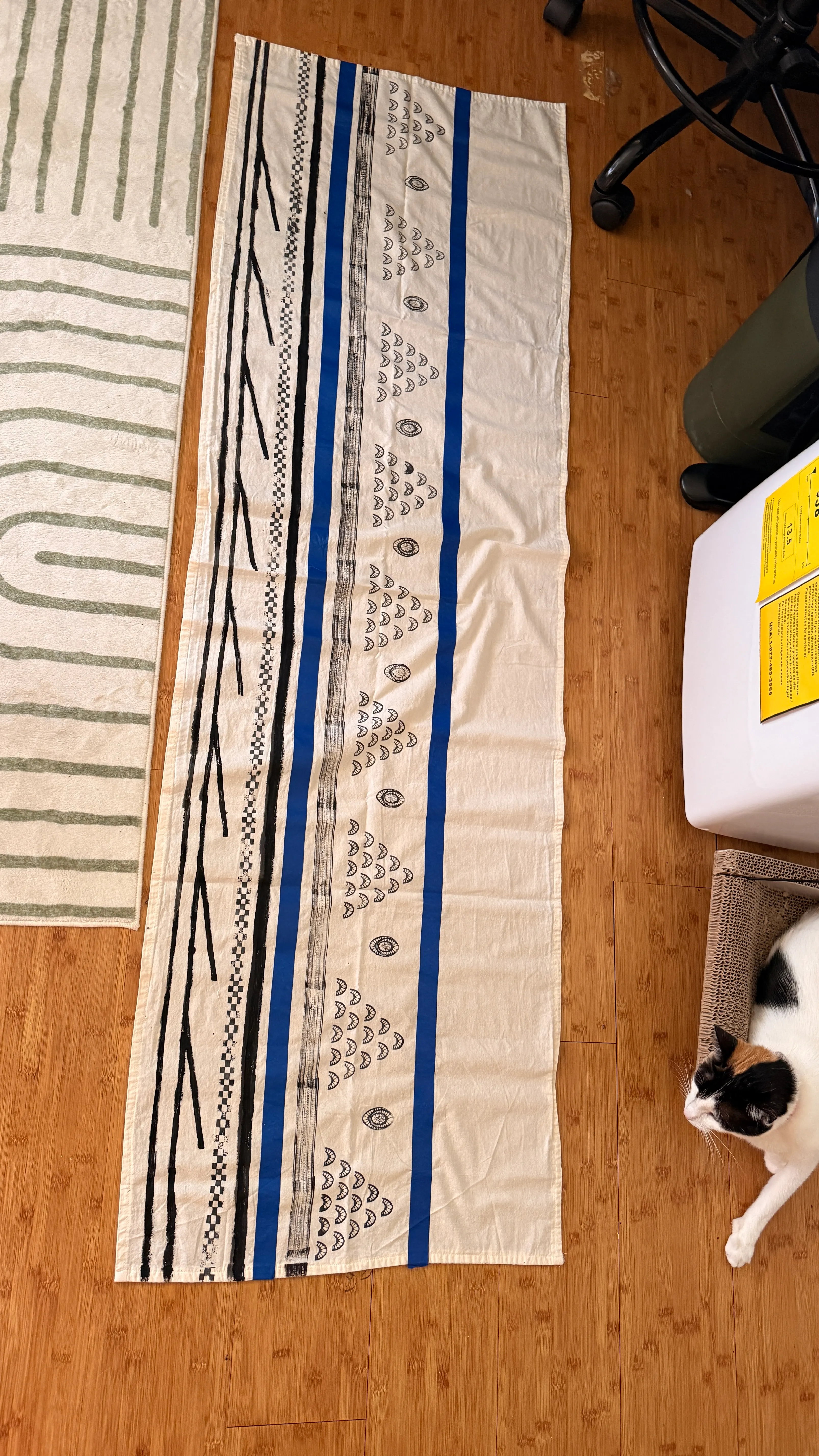
People sometimes ask how a single practice can hold kapa-making alongside acrylic painting alongside woodworking alongside illustration. The implied question is: what connects them? What is the through-line?
The honest answer is: the maker connects them. Not a unified aesthetic. Not a shared material logic. The same person, approaching each with the same values and the same quality of attention, even when the work itself looks nothing like the work in the next medium.
The honest answer is: the maker connects them. Not a unified aesthetic. The same person, approaching each with the same values and the same quality of attention.
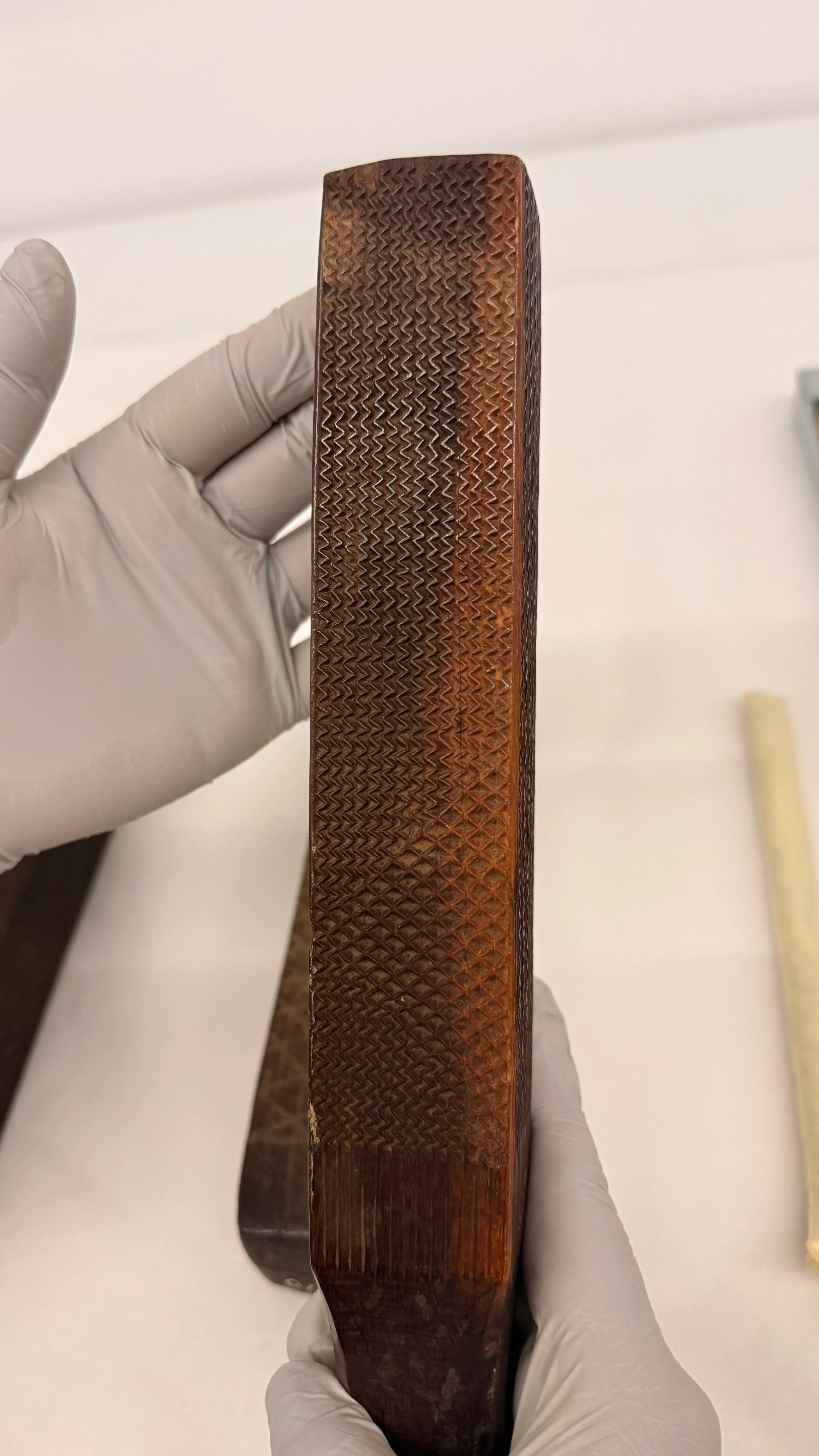
Each material on its own terms
One of the things that a multi-material practice teaches quickly is that materials have their own intelligence. Wauke bark behaves according to its own conditions, its moisture, its preparation, the season it was harvested in. Wood grain makes its own demands on the tool. Paint moves in ways that have nothing to do with what you intended when you loaded the brush.
Working well with a material means learning to listen to it. Not imposing a predetermined outcome, but staying in conversation with what the material is actually doing. This is as true for digital work as it is for physical materials. The constraints and affordances of a medium shape what is possible, and working against them usually produces worse results than working with them.
The practice as a whole
What these materials share is not a look or a technique. What they share is the framework they are approached through: kilo, moʻolelo, hana noʻeau. The same sustained attention. The same question about what story this work belongs to. The same understanding that making well is itself a form of thinking.
The practice does not require the materials to overlap in any given project. A kapa piece is a kapa piece. A woodworking project is a woodworking project. They do not need to combine to be coherent. They are coherent because the same intelligence, the same commitment to careful, intentional making, runs through all of them.
That is what it means to have a multi-material practice. Not that everything blurs together, but that everything is held by the same maker, working from the same place.