
Interaction · Ecological Design
Wauke: A Living Map of Possibility
Overview
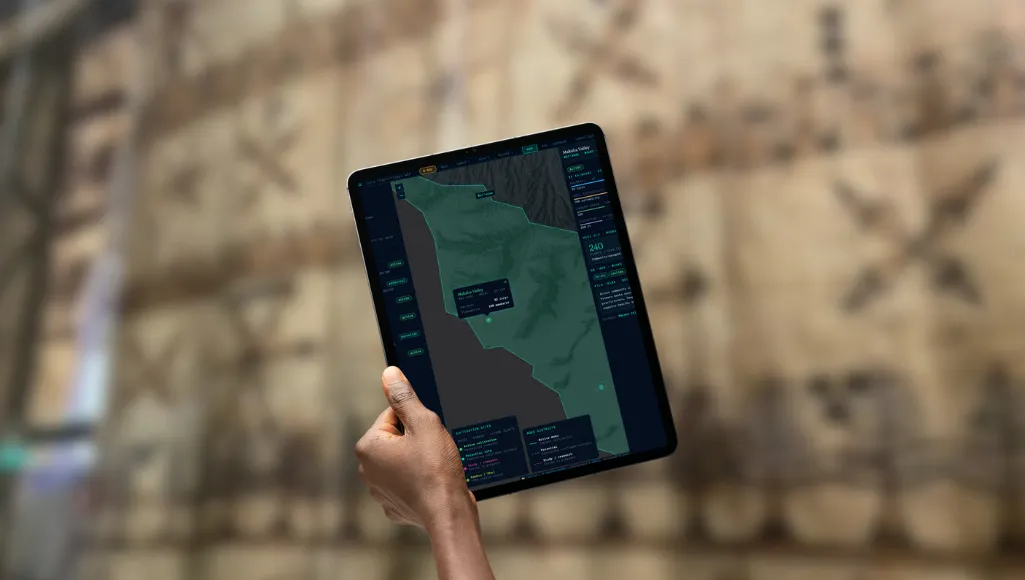
Wauke: A Living Map of Possibility is an interactive mapping dashboard tracing where wauke (paper mulberry, the plant kapa is made from) is currently cultivated across Oʻahu, and visualizing the ecological conditions and potential outputs of expanded propagation. It is design as a tool for cultural restoration.
The Inversion
Most Tools Serve Extraction
Most design and data tools help identify what can be taken from a place. Wauke inverts that logic. It asks what can be grown here, what can be restored.
A Map as Proposition
Using the language of data visualization, legible to designers, technologists, and ecologists alike, the map makes the case for a specific cultural practice. It is not neutral, it is a proposition: that wauke can come back, that the conditions exist, that the potential is real and spatially locatable.
How It Works
Map What Is
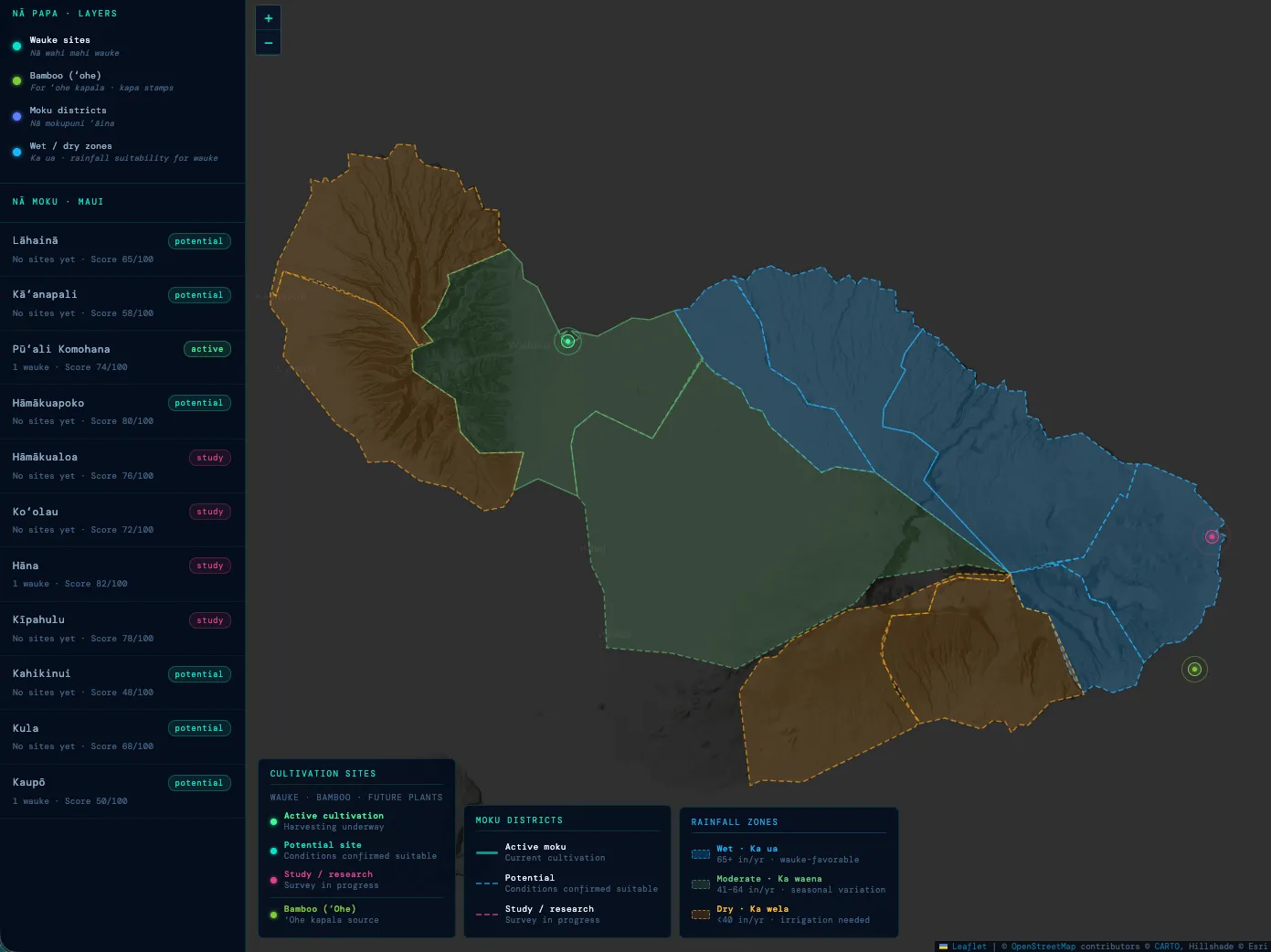
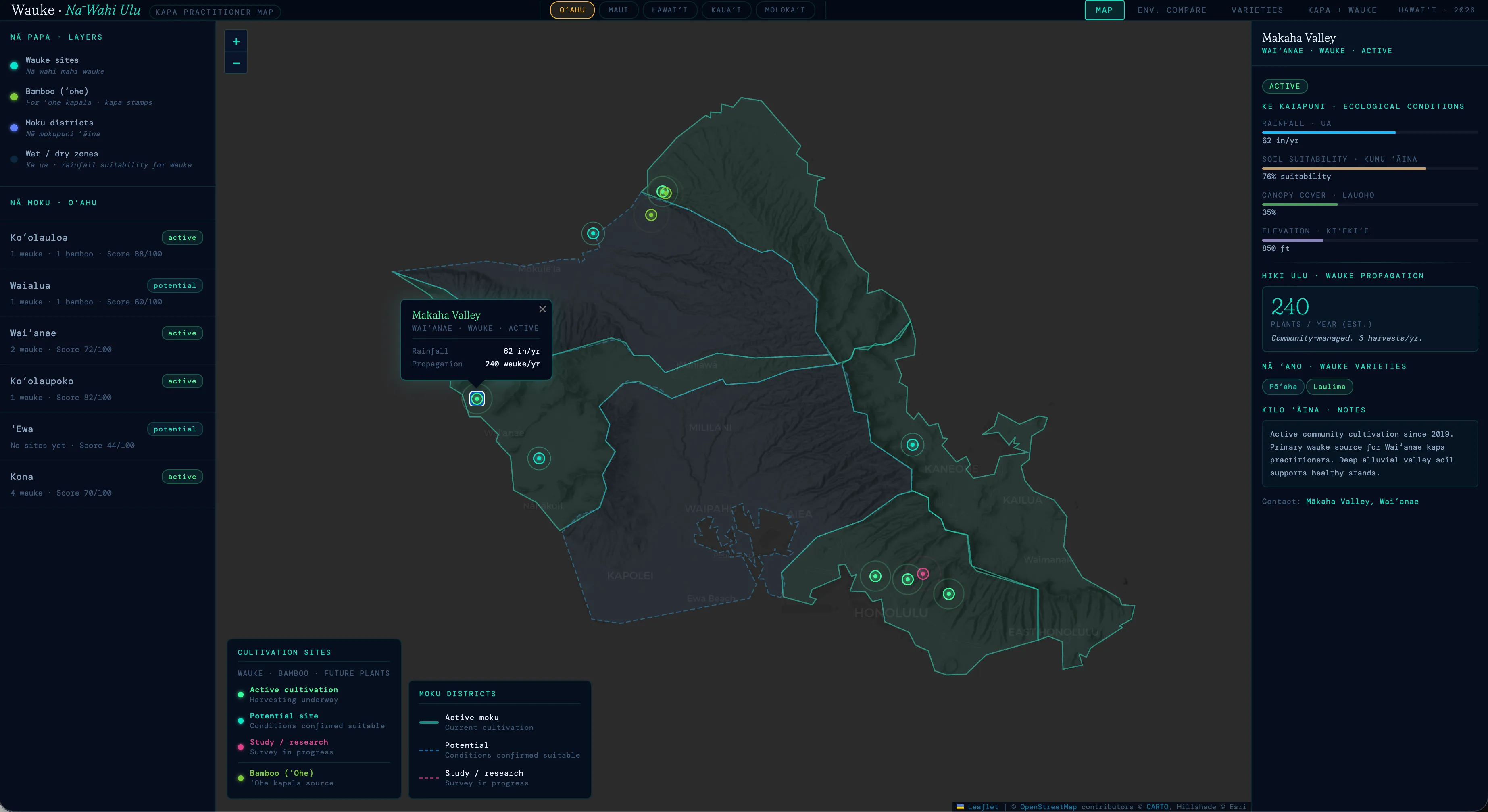
Current wauke cultivation sites across Oʻahu are located and visualized, grounding the project in the real, present state of the plant.
Model What Could Be
Ecological-condition layers and propagation-potential views let a user see where expansion is possible, turning documentation into proposition.
Designed for Practitioners
ʻŌlelo Hawaiʻi place names, an ecologically honest palette, and a material reference to the plant itself keep the interface rooted in ʻāina and made for community, not for tourism.
Why It Matters
Design as Restoration
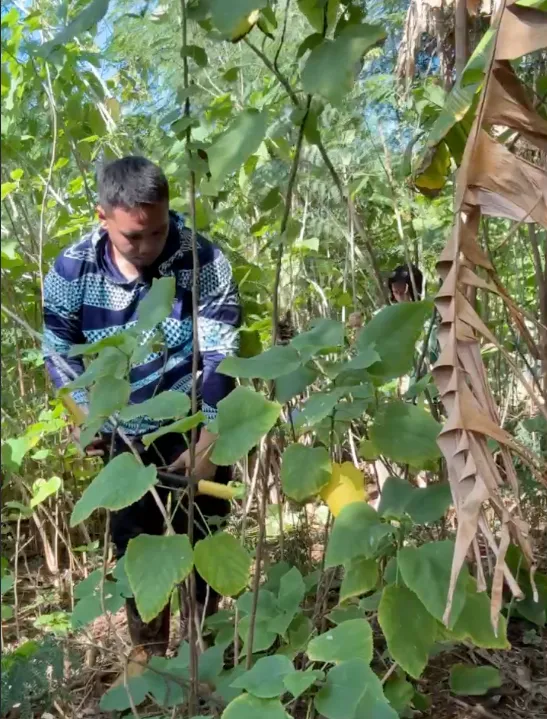
Wauke is the most literal piece in my practice. Every other work presupposes the material, the wauke that becomes bark, the bark that becomes kapa. This one asks the prior question: is the plant there, and can it come back? Design as a restoration tool means the map does not only describe what exists, it argues for what could.
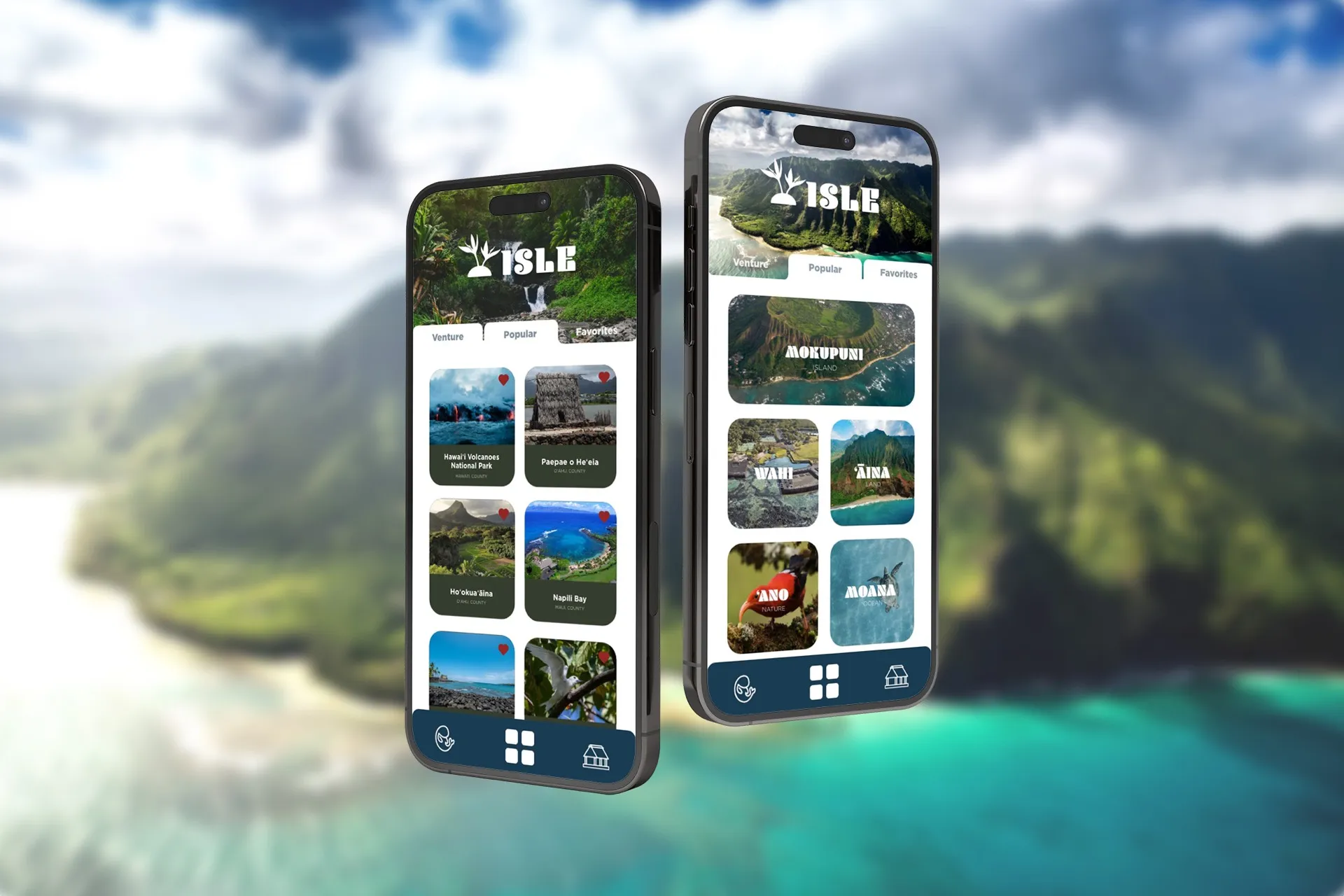
Island Sustainability Learning Experience App
Preservation of culture and land through respectful ʻāina-friendly choices.
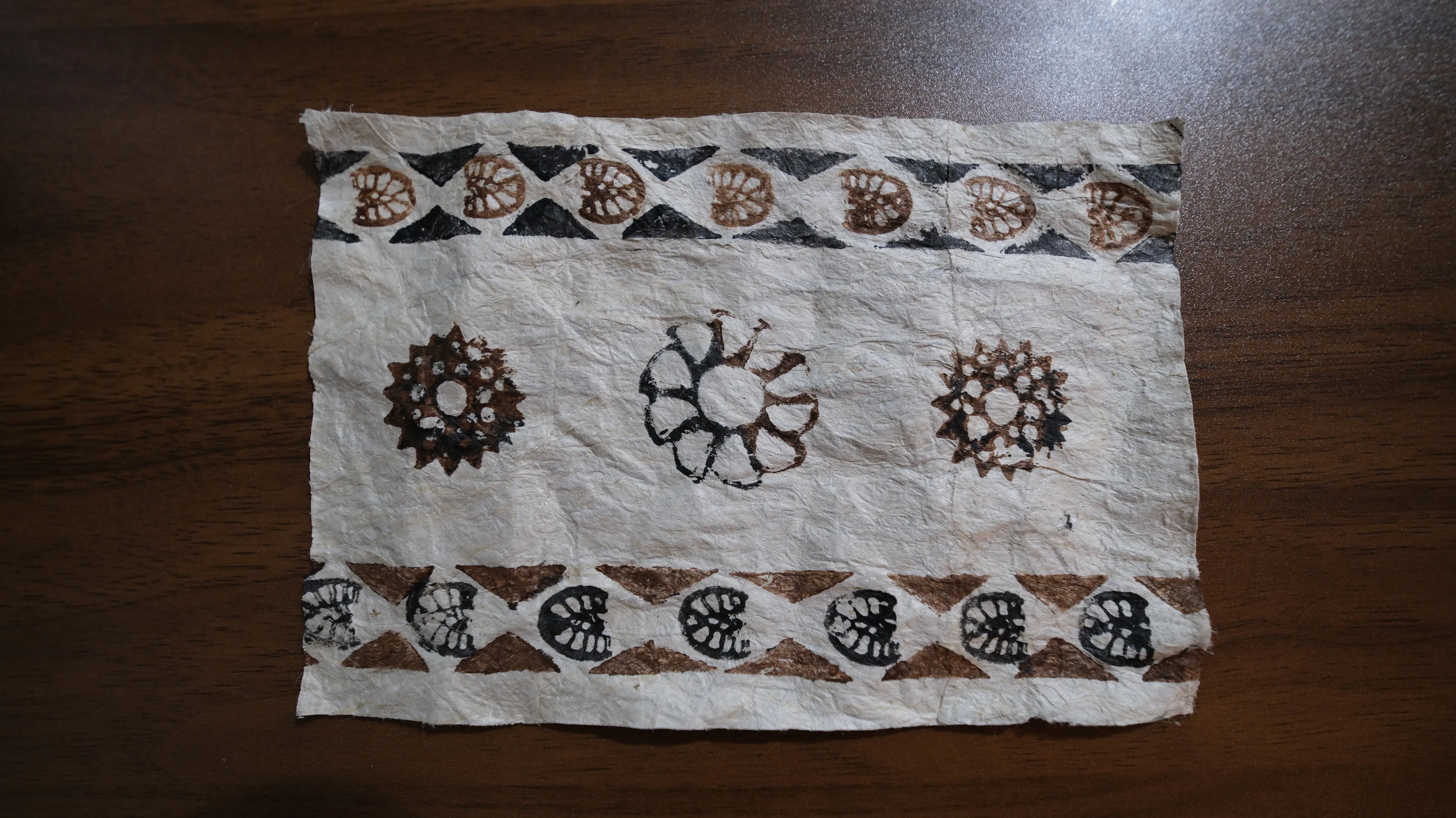
Eras of Kapa: The Impact of Metal Tools
Beating cloth across three eras to feel how tools shape design.
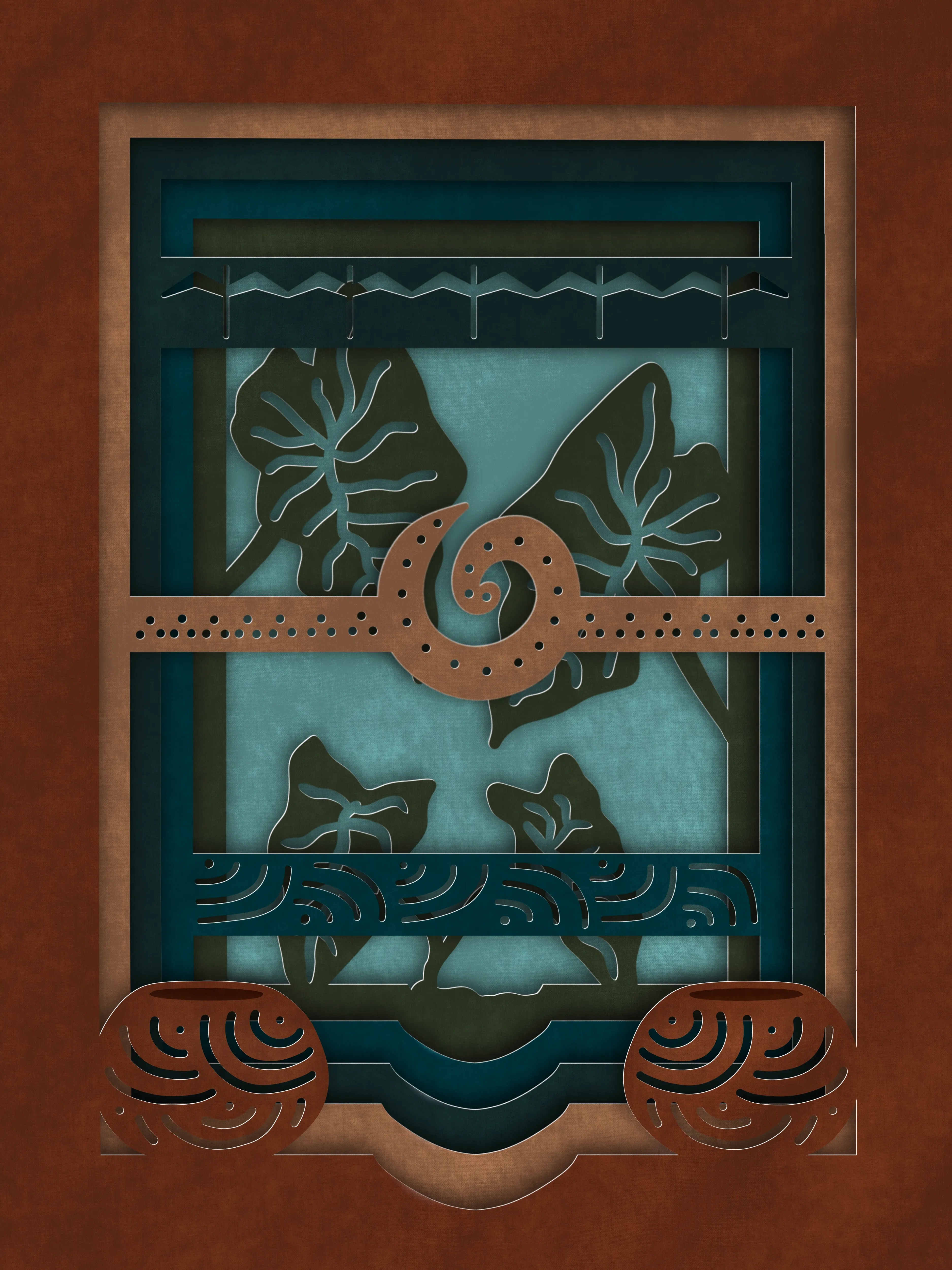
Kiʻi o ka Hana: Imaging the Work of Making
Depth, light, and material holding what cannot be spoken.